Interview practice designed for Digital Solutions Managers.
Upload your resume, tell us your target role, and we interview you based on your actual experience. Get feedback you can use immediately, so you walk in calm and prepared.
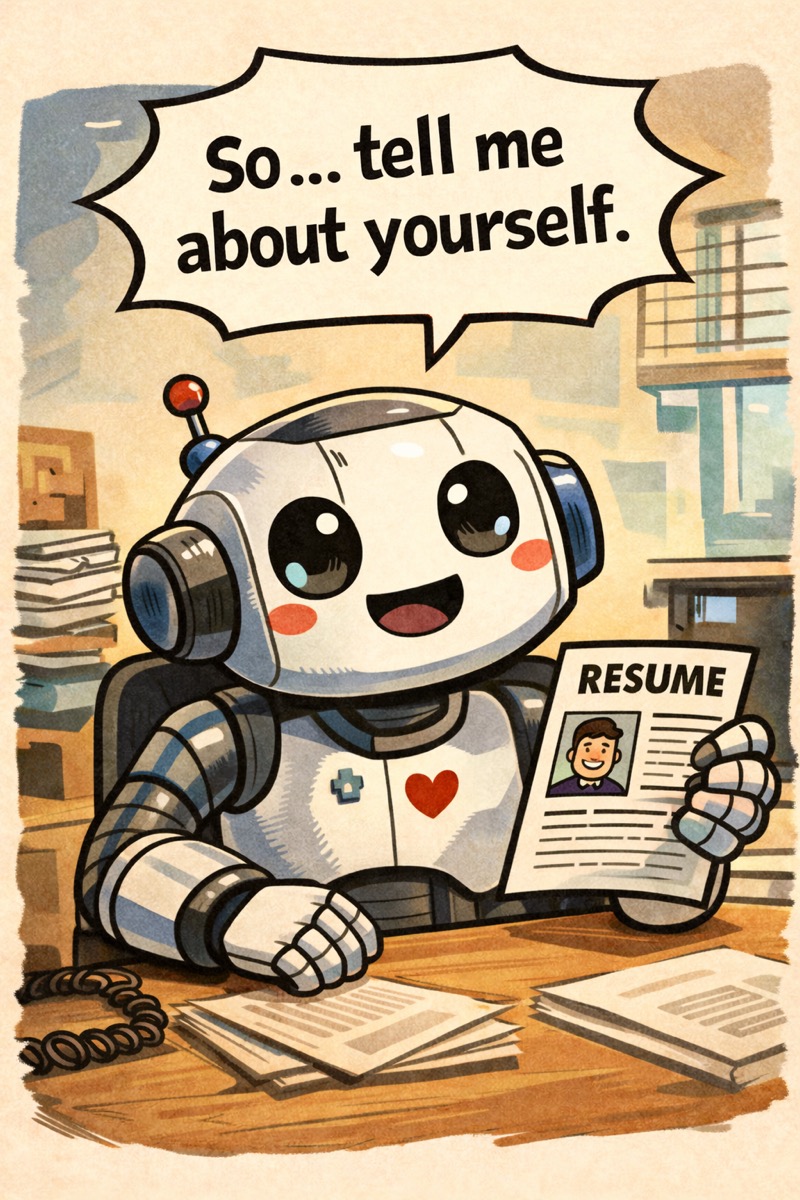
How it works
Upload your resume
We extract the key experiences and skills so your questions match your real background.
Tailor the interview
Tell us the industry, role, and target companies. We build an interview tailored to your experience and target job.
Get actionable feedback
Strengths, gaps, and rewrites to help you sound confident in your real interview.
From resume to tailored interview
- Led a 5-person research effort that reduced large-scale graph neural network training time by 38% on a 64-GPU Kubernetes cluster using PyTorch DDP, NCCL tuning, and mixed precision.
- Designed and published a privacy-preserving telemetry pipeline processing 2.1B events/day with Spark and Delta Lake, enabling differential privacy reports with <2% utility loss.
- Built a retrieval-augmented prototype for incident triage that cut mean time to resolution from 3.4 hours to 1.9 hours by combining vector search (FAISS) with a rules engine and human feedback loops.
- Developed a static + dynamic program analysis tool in Rust that detected 27 previously unknown memory-safety issues across internal services and integrated into CI with a 12-minute median runtime.
Why practice first?
Interviews are high-pressure
Even strong candidates underperform without reps. Practice reduces stress and sharpens delivery.
Rehearsal builds muscle memory
You get comfortable telling your story, quantifying impact, and handling curveball follow-ups.
Feedback accelerates improvement
Immediate, actionable notes help you close gaps before the real interview.
Average session rating from beta users
Report feeling more confident after one session
Typical time to complete a full mock interview
Pricing
Explore by role
Current role category: Computer and Information Research Scientists