Interview practice designed for Research Development Specialists.
Upload your resume, tell us your target role, and we interview you based on your actual experience. Get feedback you can use immediately, so you walk in calm and prepared.
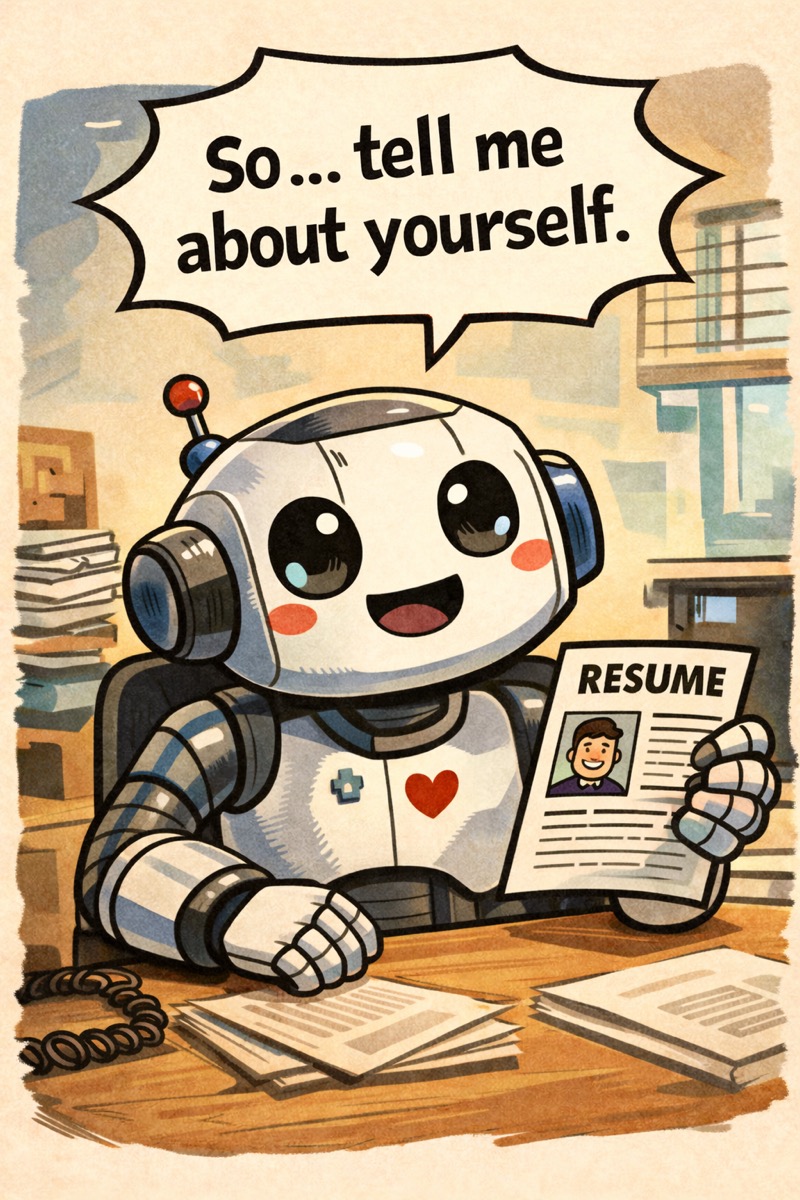
How it works
Upload your resume
We extract the key experiences and skills so your questions match your real background.
Tailor the interview
Tell us the industry, role, and target companies. We build an interview tailored to your experience and target job.
Get actionable feedback
Strengths, gaps, and rewrites to help you sound confident in your real interview.
From resume to tailored interview
- Developed a high-temperature epoxy-silica composite for aerospace brackets, raising glass transition temperature from 165C to 205C while maintaining tensile strength within 5% of baseline across 12 formulation iterations.
- Led SEM/EDS and XRD failure analysis on powder-bed fusion stainless steel parts, identifying oxide inclusions that reduced scrap rate from 8.4% to 2.1% by updating powder handling and sieve controls.
- Designed and executed a 3-factor DOE (n=27) for lithium-ion cathode slurry rheology using Minitab and a rotational rheometer, cutting viscosity variability by 30% and improving coating thickness uniformity to +/-2 microns.
- Built a COMSOL thermal model and validated it with DSC/TGA data to optimize cure profiles, reducing cycle time by 18% and lowering void content from 1.6% to 0.4% measured by micro-CT.
Why practice first?
Interviews are high-pressure
Even strong candidates underperform without reps. Practice reduces stress and sharpens delivery.
Rehearsal builds muscle memory
You get comfortable telling your story, quantifying impact, and handling curveball follow-ups.
Feedback accelerates improvement
Immediate, actionable notes help you close gaps before the real interview.
Average session rating from beta users
Report feeling more confident after one session
Typical time to complete a full mock interview
Pricing
Explore by role
Current role category: Materials Scientists