Interview practice designed for Consulting Marine Engineers.
Upload your resume, tell us your target role, and we interview you based on your actual experience. Get feedback you can use immediately, so you walk in calm and prepared.
- Rated 4.8/5 by beta users
- No credit card required to sign up
- Tailored to your resume and Consulting Marine Engineer roles
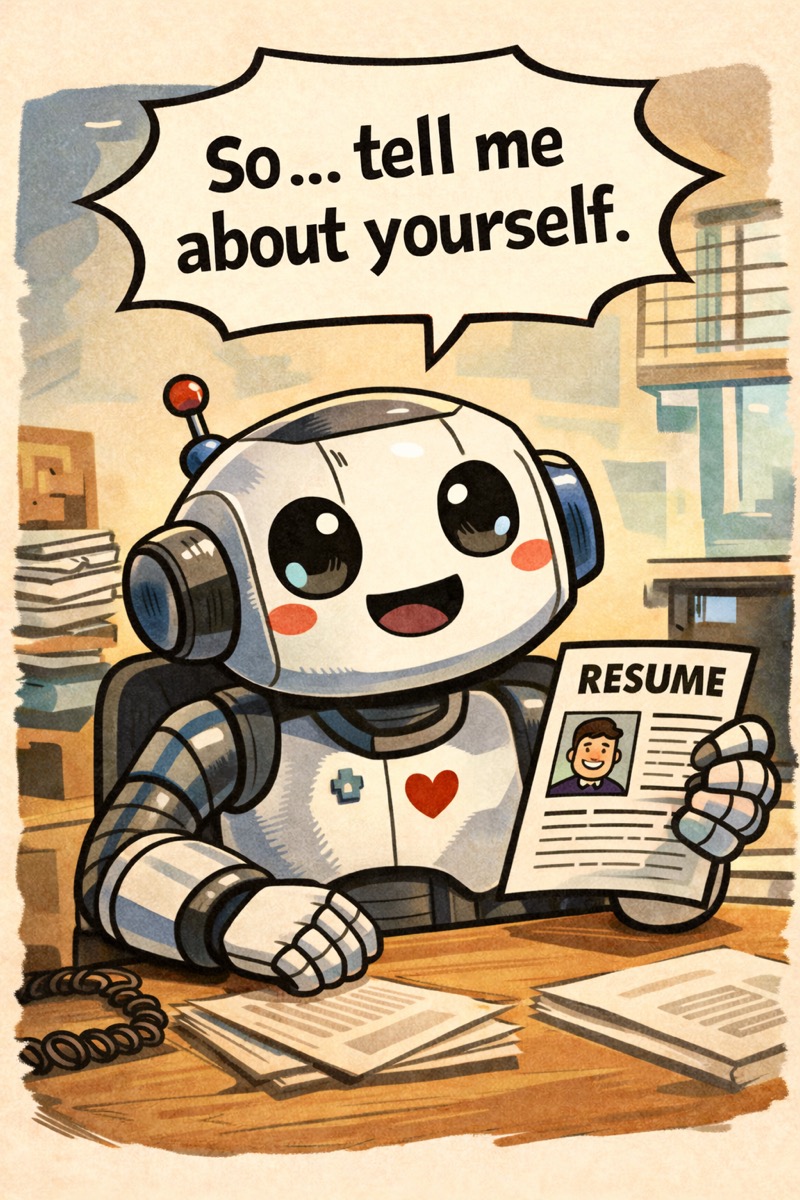
How it works
Upload your resume
We extract the key experiences and skills so your questions match your real background.
Tailor the interview
Tell us the industry, role, and target companies. We build an interview tailored to your experience and target job.
Get actionable feedback
Strengths, gaps, and rewrites to help you sound confident in your real interview.
From resume to tailored interview
- Led preliminary and contract design for two 85 m offshore support vessels, producing weight estimates, general arrangement drawings, and powering predictions that reduced lightship growth by 3.8 percent using NAPA and Rhino.
- Performed intact and damage stability analyses for a 3,200 TEU feeder container ship, resolving 14 nonconformities to IMO and class criteria (ABS) and cutting review cycles from 6 weeks to 3 weeks.
- Ran CFD and resistance studies (STAR-CCM+) on a bulbous bow retrofit for a 60,000 DWT tanker, recommending geometry changes that improved predicted fuel consumption by 4.5 percent at 14.5 knots.
- Managed shipyard change orders during construction of a 120 m ferry, coordinating structural revisions in ShipConstructor and AutoCAD to close 22 RFIs and avoid an estimated $410k in rework.
What to expect in Consulting Marine Engineers interviews
Consulting Marine Engineer interviews tend to center on system design trade-offs, code quality, debugging under pressure, and how you ship changes reliably. Interviewers want proof that you can own work end to end, make reasonable trade-offs on your own, and keep stakeholders informed without close supervision. Expect domain questions that touch on Ship structural design, CFD (STAR-CCM+), Stability analysis, and AutoCAD, and be ready to tie each one to a concrete result.
A typical opening question for marine engineers and naval architect candidates is “What is your process for a new vessel concept when the owner only has mission needs and a target budget?” Strong answers name the situation, the specific decision you made, and a measurable outcome. Follow-ups usually test depth and judgment, for example “Can you give a specific example of a stability issue you found and how you fixed it?” MethodJobs reads your resume and asks follow-ups like these based on your actual Consulting Marine Engineer experience, so you can rehearse the hard parts and get feedback before the real interview.
Why practice first?
Interviews are high-pressure
Even strong candidates underperform without reps. Practice reduces stress and sharpens delivery.
Rehearsal builds muscle memory
You get comfortable telling your story, quantifying impact, and handling curveball follow-ups.
Feedback accelerates improvement
Immediate, actionable notes help you close gaps before the real interview.
Average session rating from beta users
Report feeling more confident after one session
Typical time to complete a full mock interview
Pricing
Explore by role
Current role category: Marine Engineers and Naval Architects