Interview practice designed for Electronics Engineers.
Upload your resume, tell us your target role, and we interview you based on your actual experience. Get feedback you can use immediately, so you walk in calm and prepared.
- Rated 4.8/5 by beta users
- No credit card required to sign up
- Tailored to your resume and Electronics Engineer roles
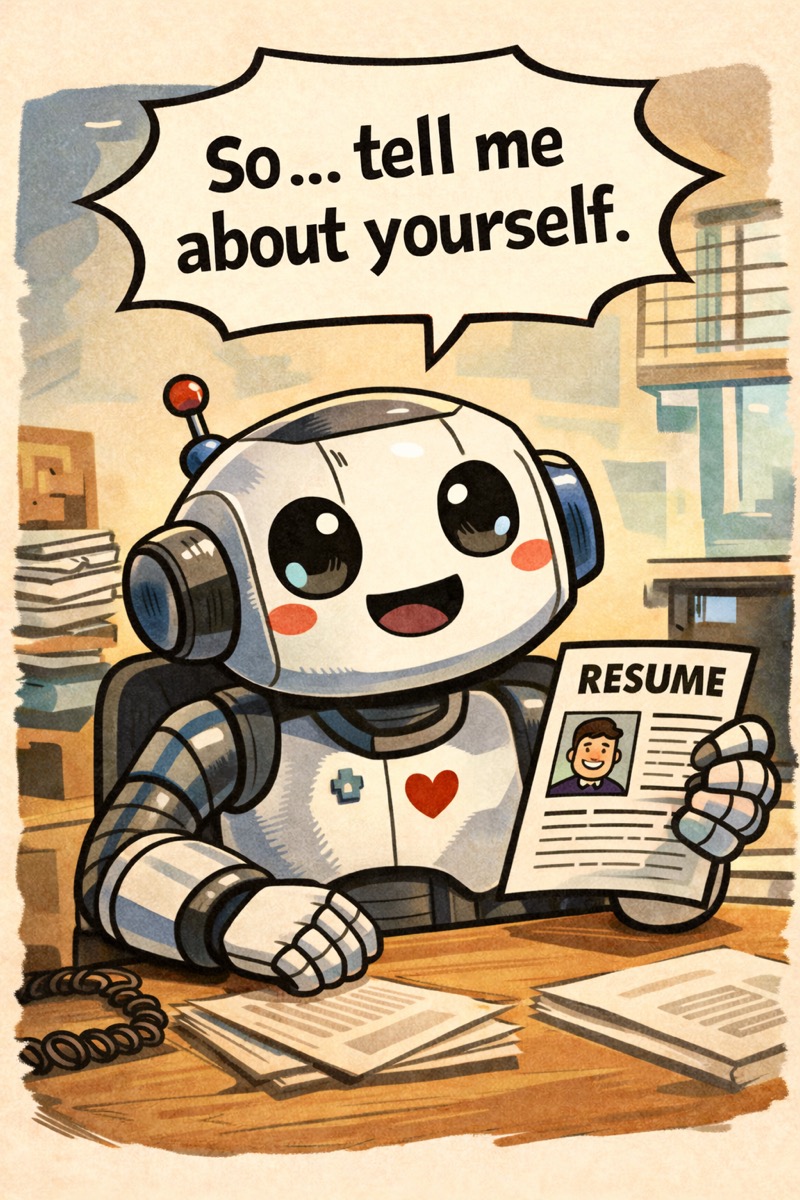
How it works
Upload your resume
We extract the key experiences and skills so your questions match your real background.
Tailor the interview
Tell us the industry, role, and target companies. We build an interview tailored to your experience and target job.
Get actionable feedback
Strengths, gaps, and rewrites to help you sound confident in your real interview.
From resume to tailored interview
- Designed and validated a PCIe Gen4 NVMe SSD controller reference board, reducing bring-up time from 6 weeks to 3 weeks through automated boundary-scan and scripted lab tests.
- Led schematic capture and PCB layout reviews for a 12-layer x86 single-board computer (DDR4, USB 3.2, GbE), cutting EMI re-test failures by 40% using pre-compliance scans and layout constraints.
- Developed firmware-assisted power sequencing and telemetry for a 48V-to-multi-rail VRM subsystem, improving board-level power efficiency by 6% and lowering peak thermals by 8C under full load.
- Owned failure analysis for RMAs (BGA solder cracks, ESD events, signal integrity issues) and implemented corrective actions that improved first-pass manufacturing yield from 93% to 97% across two contract manufacturers.
What to expect in Electronics Engineers interviews
Electronics Engineer interviews tend to center on system design trade-offs, code quality, debugging under pressure, and how you ship changes reliably. Interviewers want proof that you can own work end to end, make reasonable trade-offs on your own, and keep stakeholders informed without close supervision. Expect domain questions that touch on Altium Designer, Signal integrity (HyperLynx), Oscilloscope/logic analyzer, and FPGA bring-up (Xilinx), and be ready to tie each one to a concrete result. Because this title specializes in electronics, examples drawn from electronics work will carry more weight than general computer hardware engineer stories.
A typical opening question for computer hardware engineer candidates is “Youve worked on DDR4 and PCIe boards; how do you typically handle bring-up and isolate issues quickly?” Strong answers name the situation, the specific decision you made, and a measurable outcome. Follow-ups usually test depth and judgment, for example “Can you give an example of a tough signal integrity problem you solved and what tools you used?” MethodJobs reads your resume and asks follow-ups like these based on your actual Electronics Engineer experience, so you can rehearse the hard parts and get feedback before the real interview.
Why practice first?
Interviews are high-pressure
Even strong candidates underperform without reps. Practice reduces stress and sharpens delivery.
Rehearsal builds muscle memory
You get comfortable telling your story, quantifying impact, and handling curveball follow-ups.
Feedback accelerates improvement
Immediate, actionable notes help you close gaps before the real interview.
Average session rating from beta users
Report feeling more confident after one session
Typical time to complete a full mock interview
Pricing
Explore by role
Current role category: Computer Hardware Engineers