Interview practice designed for Histologists.
Upload your resume, tell us your target role, and we interview you based on your actual experience. Get feedback you can use immediately, so you walk in calm and prepared.
- Rated 4.8/5 by beta users
- No credit card required to sign up
- Tailored to your resume and Histologist roles
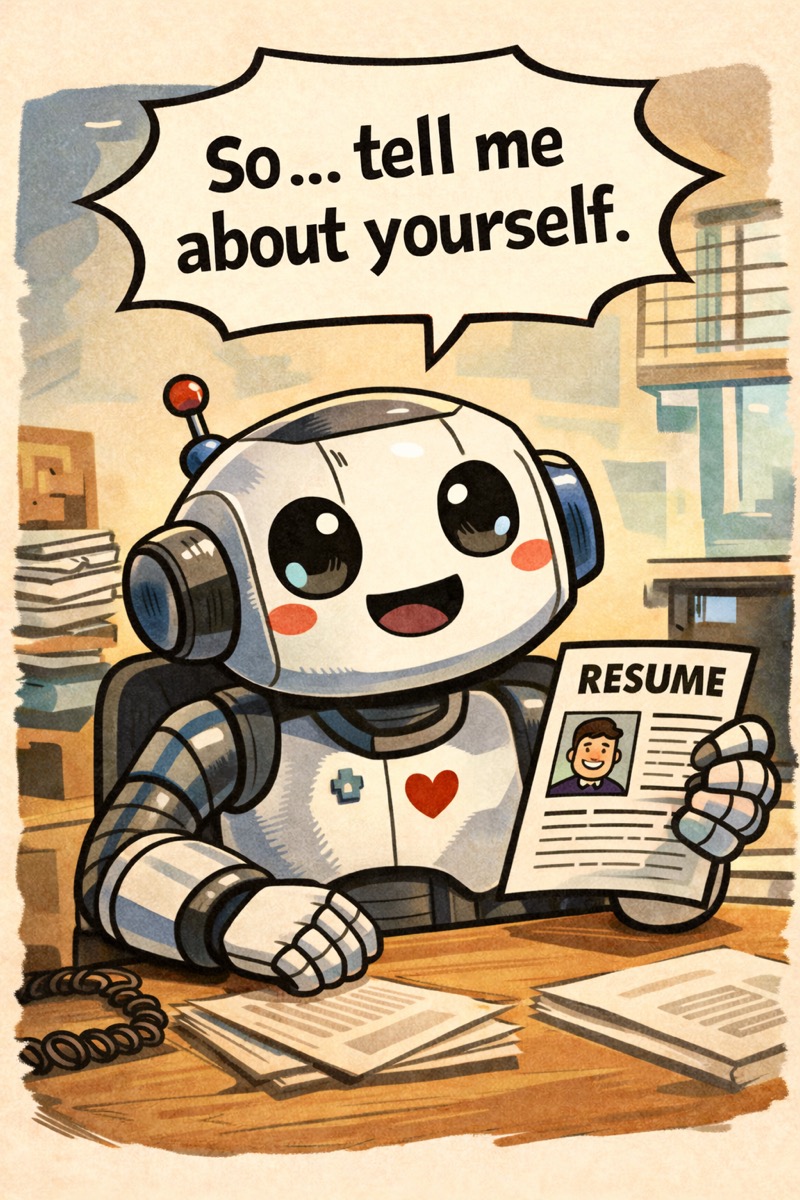
How it works
Upload your resume
We extract the key experiences and skills so your questions match your real background.
Tailor the interview
Tell us the industry, role, and target companies. We build an interview tailored to your experience and target job.
Get actionable feedback
Strengths, gaps, and rewrites to help you sound confident in your real interview.
From resume to tailored interview
- Led preclinical immuno-oncology studies for a PD-1 combination program, designing murine dosing schedules and analyzing tumor growth in 180+ animals with 22% improved response rate versus control.
- Developed and validated qPCR and ELISA assays for cytokine and viral load endpoints, achieving LOD improvements of 3x and inter-assay CV below 10% under GLP-like documentation.
- Managed clinical sample workflows for a Phase 1 biomarker sub-study (n=96), implementing LIMS tracking and standardizing PBMC processing to cut sample deviations by 35%.
- Performed statistical analysis and data visualization in R and GraphPad Prism, delivering 12 study reports and 3 poster presentations and supporting an IND-enabling package on schedule.
What to expect in Histologists interviews
Histologist interviews tend to center on how you frame ambiguous questions, choose methods, validate results, and turn findings into decisions. Interviewers want proof that you can own work end to end, make reasonable trade-offs on your own, and keep stakeholders informed without close supervision. Expect domain questions that touch on qPCR, ELISA, Flow cytometry, and R, and be ready to tie each one to a concrete result.
A typical opening question for medical scientist candidates is “Can you walk me through a study where you improved an assay and how you proved it was reliable?” Strong answers name the situation, the specific decision you made, and a measurable outcome. Follow-ups usually test depth and judgment, for example “What would you do if you saw drift in the standard curve over several runs after the assay went live?” MethodJobs reads your resume and asks follow-ups like these based on your actual Histologist experience, so you can rehearse the hard parts and get feedback before the real interview.
Why practice first?
Interviews are high-pressure
Even strong candidates underperform without reps. Practice reduces stress and sharpens delivery.
Rehearsal builds muscle memory
You get comfortable telling your story, quantifying impact, and handling curveball follow-ups.
Feedback accelerates improvement
Immediate, actionable notes help you close gaps before the real interview.
Average session rating from beta users
Report feeling more confident after one session
Typical time to complete a full mock interview
Pricing
Explore by role
Current role category: Medical Scientists